
“I’m Pretty Happy With Whatever Happens”: Lexi Bullis Racing on the World Stage

Lexi Bullis didn’t start out as a snowboard racer. She grew up skiing, until she found snowboard racing through her high school. She leaned into something new, followed her curiosity, and kept going.
Ten years later, she’s competing internationally during a season that places her among the world’s top athletes, racing at the highest level of the sport.
As she navigates the pressure, progress, and pride that come with competing on the world stage, Lexi stays grounded in perspective, focused on what she can control, and proud of the journey that brought her here.
Below, she shares her story: how it all started, how it’s going, and why she’s approaching this moment with calm, confidence, and belief as she looks toward the most important global winter event.
A Conversation with Lexi Bullis
Q: How did you get into snowboard racing?
“I started snowboard racing in high school. I was actually a big time ski racer first, like, pretty serious about it. Then my high school started a snowboard team.
I didn’t even know it was a racing team at first. I just thought, ‘Okay, snowboarding sounds fun.’ And then I found out it was racing. In Wisconsin, it was actually a high school sport, which is really not normal. Usually snowboard racing is a club sport.
My stepdad taught me how to use an alpine snowboard, which is different. It’s really meant just for carving. I told him, ‘I joined the team and it’s racing, so I probably should learn this.’
I learned how to ride it, and it honestly went really well.”
Q: What happened after that?
“Things moved fast. Like, really fast. In the next two years, I won state twice and qualified for nationals all three years. Then the year after that, I won nationals in my age group.
By the time I was 18, I moved up to the international level and started racing on the North American Circuit in the U.S. and Canada. So it was kind of like a quick transition into a world I didn’t really know a lot about, and it’s kind of opened kind of like a bunch of doors for me that I could never have imagined.”
Q: At what age did you start?
“I learned how to ski when I was 18 months old. My dad put me on a snowboard when I was four, but I only snowboarded once or twice a year.
I didn’t snowboard a whole ton growing up. I’ve been snowboard racing since 2015, though, so this winter is actually ten years for me.”
Q: Did your family play a big role early on?
“Yeah. My older brother and I signed up for the team at the same time. Then there was an email asking for a parent volunteer, and my dad was like, ‘Okay, I’ll help.’
And then he ended up coaching the team for nine years.
Once I hit a level where I needed to move on from that, I did."
Q: Can you tell us about your team?

“Snowboard racing lost national team funding years ago. All of a sudden, athletes were just… on their own.
A group of former racers created a nonprofit called the U.S. Snowboard Racing Team so we could have an identity and represent the U.S. internationally. We’re not affiliated with U.S. Snowboarding at all.
Right now, on our elite team, we have five guys racing in the World Cup and three women, including me. Then there’s a North American team and juniors. Everyone competes. It’s just different levels.”
Q: How does qualification work at this level?
“It’s complicated. Like, really complicated. It’s not cut and dry, so you really don’t know what’s going to happen.”
Q: How are you feeling about this season and the upcoming global winter event?
“I actually feel really good.
I’m not ranked the highest right now, but if I qualify, that would be amazing. And if I don’t, I’ve still officially made the quota list, which is something I’m really proud of.
I’ve kind of shifted my mindset. I’m proud of what I’ve done over the last ten years, and I’m going into races pretty happy with whatever happens.”
Q: When did getting a chance to qualify start to feel real for you?
“In December, I qualified for a second run at two World Cup races. I had never really done that before with a full international field.

In one race, I finished 27th and scored World Cup points. That was the first time I really felt like, ‘Okay, I deserve to be here.’ That was really cool.”
Q: What feels different about this season?
“This is probably the best season I’ve had in terms of coaches, teammates, and just the environment. It's just like a great environment, and that's been also very important in helping me feel good going into these races.”
Q: Do you think that helps in some way with your confidence when getting on the snowboard?
“Yeah, I think having that confidence and having those positive feelings definitely helps out of it being more fun. And usually if you're having more fun and then you're more positive, better things tend to happen, especially in our sport.”
Q: How do you manage pressure?
“I focus on what I can control.
After training, I think about three positive things and one thing I want to work on. That helps me close the book on the day and move on.”
Q: What has been the hardest part of this qualification journey so far?
“I think mentally for all of us, staying in a good mindset is the hardest part, because there is a lot of internal pressure you can put on yourself.
There is also a lot of external pressure coming from other people. You have expectations that you might put on yourself or other people might put on you that can be really hard. And I've been doing my best to kind of stay out of all of those.
So, that's probably been the hardest, but thankfully you have your sports psychologist.
Q: How often do you have a session?
¨I try to talk to her every week, especially in season.¨
Q: How does heated gear fit into your routine?
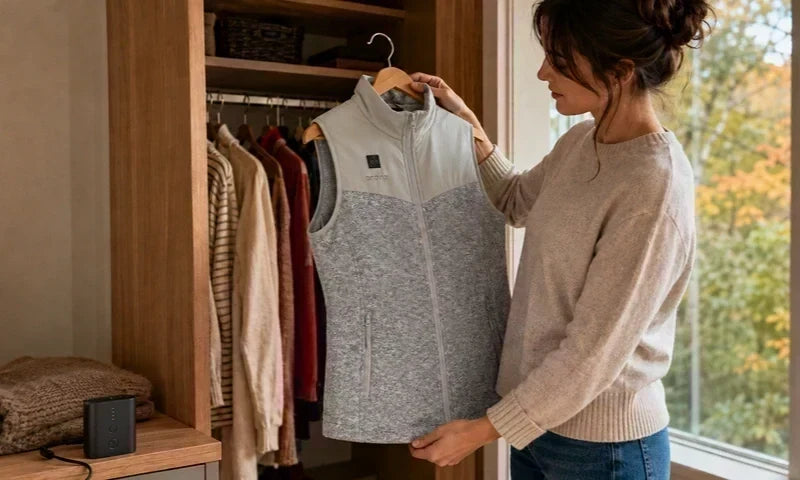
“The Classic Heated Vests are everyone’s favorite on race days because we can wear them without covering our race numbers.

When it’s really cold, I love the St. Moritz Heated Snow Jacket. It’s super warm and very red, white, and blue, which is nice on the World Cup.

The Waterproof Heated Ski Jacket is lighter and great when it’s windy.
Q: What has ororo meant for you during this journey?
It honestly makes us feel like a team. Before, everyone wore something different. Now we actually look like one and everyone else is jealous because we’re warm.”
Q: What are you most proud of right now?
“I’m really proud of being an advocate for our sport and showing younger athletes that this is possible.
I fund my snowboarding by owning a business. I sell soap and candles. Being able to support myself while doing this has been really fulfilling.
Even when it feels impossible, there’s usually a way to make it happen if you really want it.”
Q: What’s next for Lexi?

“I made the decision that after this season, I'm going to take a step back from competing. because I have never not been an athlete.
Like, first, I was trying to go playing college for soccer. And then I was ski racing at a super high level, and then I was snowboard racing at a super high level, and now I'm competing in the World Cup, like, I've never not been an athlete…
So after this cycle, I want to take a year to just be me. ”
Q: What are your plans? Anything in particular? Or, do you just want to see where life takes you?
“I think I want to do some fun triathlons, because I've done a couple of triathons in the summers.
And I think I'm going to become a little bit more involved with the logistics of the team. As far as trying to help the athletes find things and kind of be more involved on that side of things.
Otherwise, being at my house and not living out of a suitcase six months out of the year would be really nice.”
Final Thoughts
Ten years into her career, Lexi is approaching this season with clarity and perspective, focused on what she can control, proud of how far she’s come, and grounded in the work she’s put in.
“I’m pretty happy with whatever happens.”